
Heavy-Duty Machinery Crate
重型木箱
For equipment weighing several to over twenty tonnes, the critical load is rarely simple vertical compression — it is the concentrated and torsional stress during lifting, container loading and road transit. The base is what matters: a dual I-beam frame with heavy skid runners spreads load across the structure rather than individual panels, while prestressed diagonal bracing keeps the crate from racking under torsion.
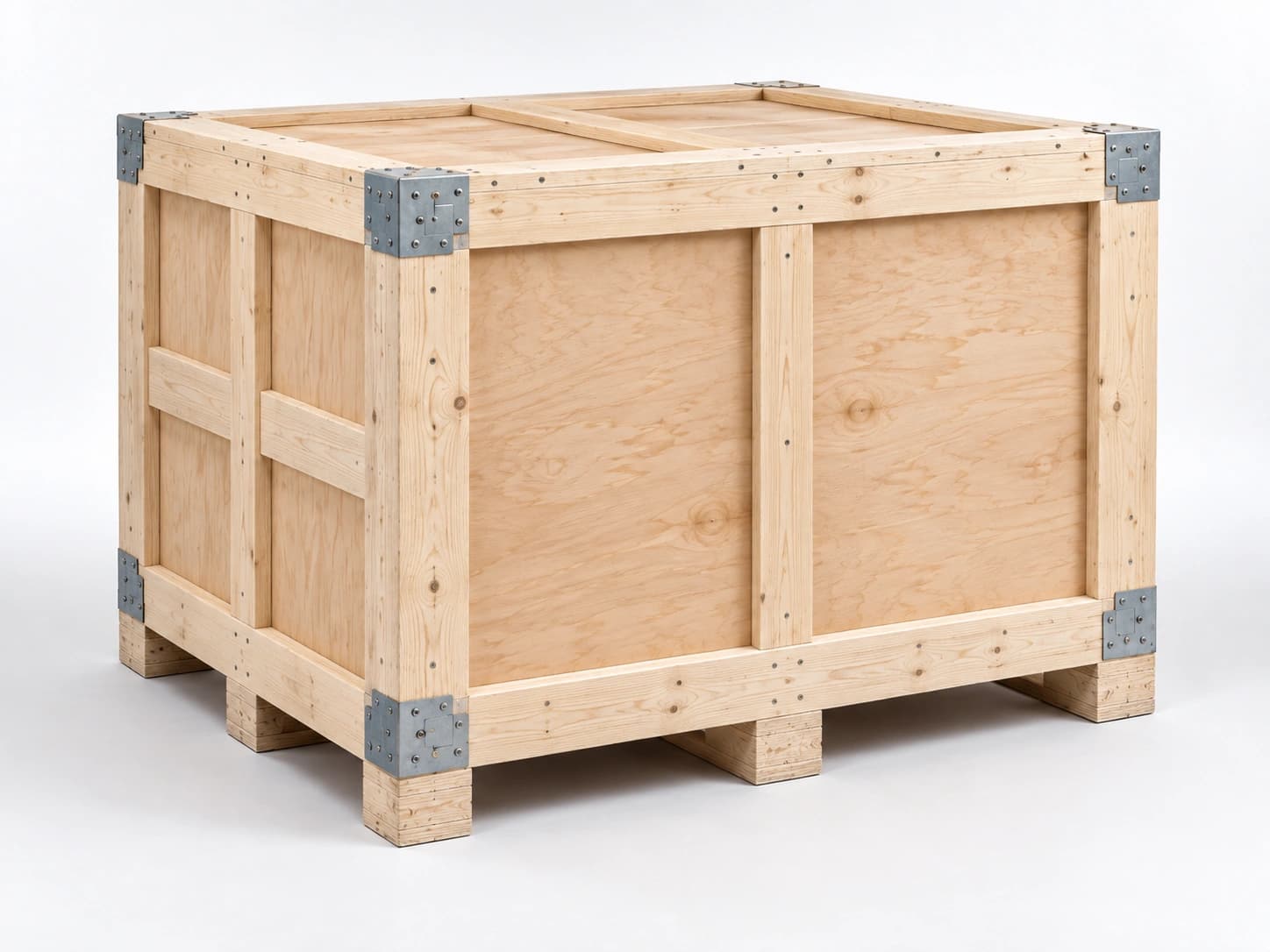
Engineered From the Inside Out
Material
Large-section structural pine beams & extra-thick loadbearing plywood
Frame
Dual I-beam base structure with heavy-duty timber skid runners
Connection
Prestressed diagonal cross-braces and high-tensile through-bolts
Application
Heavy CNC machine tools, turbine generator sets, oversize machinery
Technical Specification
| Size range | MAX 25 TONS |
|---|---|
| 01 Material | Large-section structural pine beams & extra-thick loadbearing plywood |
| 02 Frame | Dual I-beam base structure with heavy-duty timber skid runners |
| 03 Connection | Prestressed diagonal cross-braces and high-tensile through-bolts |
| 04 Application | Heavy CNC machine tools, turbine generator sets, oversize machinery |
| Key features | HEAVY SUPPORT · LOAD 5-25T · INTERNAL BRACING |
Figures above are standard reference configurations. The load-bearing structure must be calculated individually against total weight, envelope dimensions, centre of gravity and lifting method. Equipment drawings or an on-site survey should be provided before the design is finalised.
Typical Industries
Frequently Asked Questions
At what weight or size does equipment need a heavy-duty crate?
There is no single weight threshold — load distribution and transport conditions matter more than tonnage alone. As a rule, heavy-duty design becomes necessary once a single item reaches several tonnes, exceeds standard lifting or forklift handling envelopes, or has a pronounced off-centre mass. Such crates are engineered individually rather than selected from a standard size list.
How is load capacity confirmed?
Capacity derives from structural calculation and testing rather than a fixed supplier rating. The design combines equipment weight, stacking, lift points and sea-transit vibration to determine the base type, timber section and fastening method. Test methods can follow the stacking and drop procedures in the GB/T 4857 series of basic tests for transport packages. The approved drawing should be treated as the reference.
Can large equipment be packed on site?
Yes. Where equipment cannot be moved to the plant, surveying, base positioning and closing are carried out at the customer's site. Based in Nansha, Guangzhou, the team covers the Pearl River Delta industrial belt. The approach depends on site conditions, available lifting capacity and equipment readiness.
Does a heavy-duty crate require fumigation?
It depends on the materials used. If solid timber subject to ISPM 15 is used, heat treatment or fumigation and an IPPC mark are required; engineered panels such as plywood generally fall outside the scope. Heavy-duty crates often combine solid timber beams for load bearing with plywood panels, so mixed constructions should be confirmed with the destination country per shipment.
Send the Equipment Specs — Solution First, Then Price
Drawing review and on-site surveying available. The plant sits in Nansha, Guangzhou — about 30 minutes by road from the Nansha deep-water container terminal, so packed goods can be dispatched straight to port.