
Fumigation-Free Crate
免熏蒸木箱
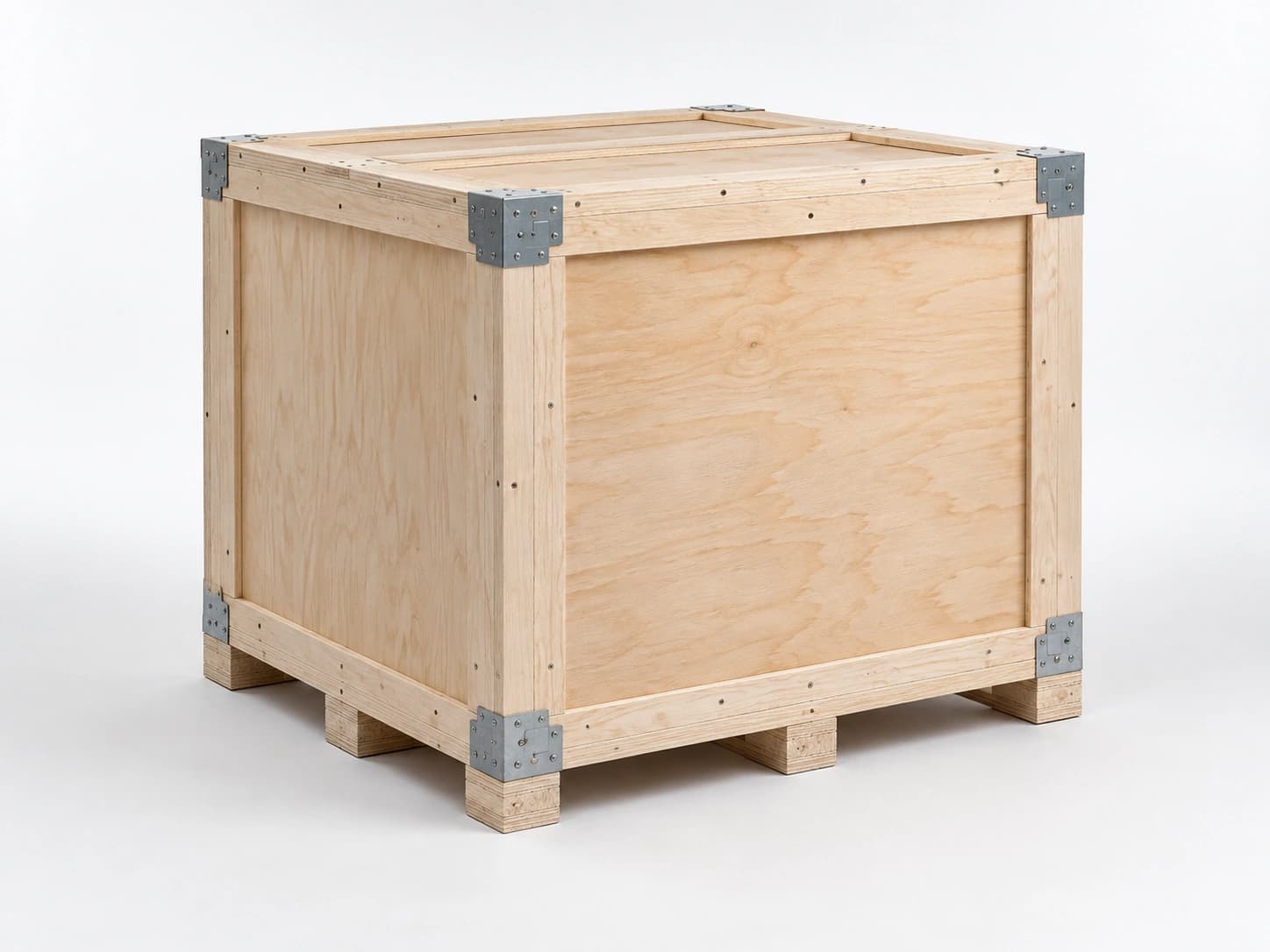
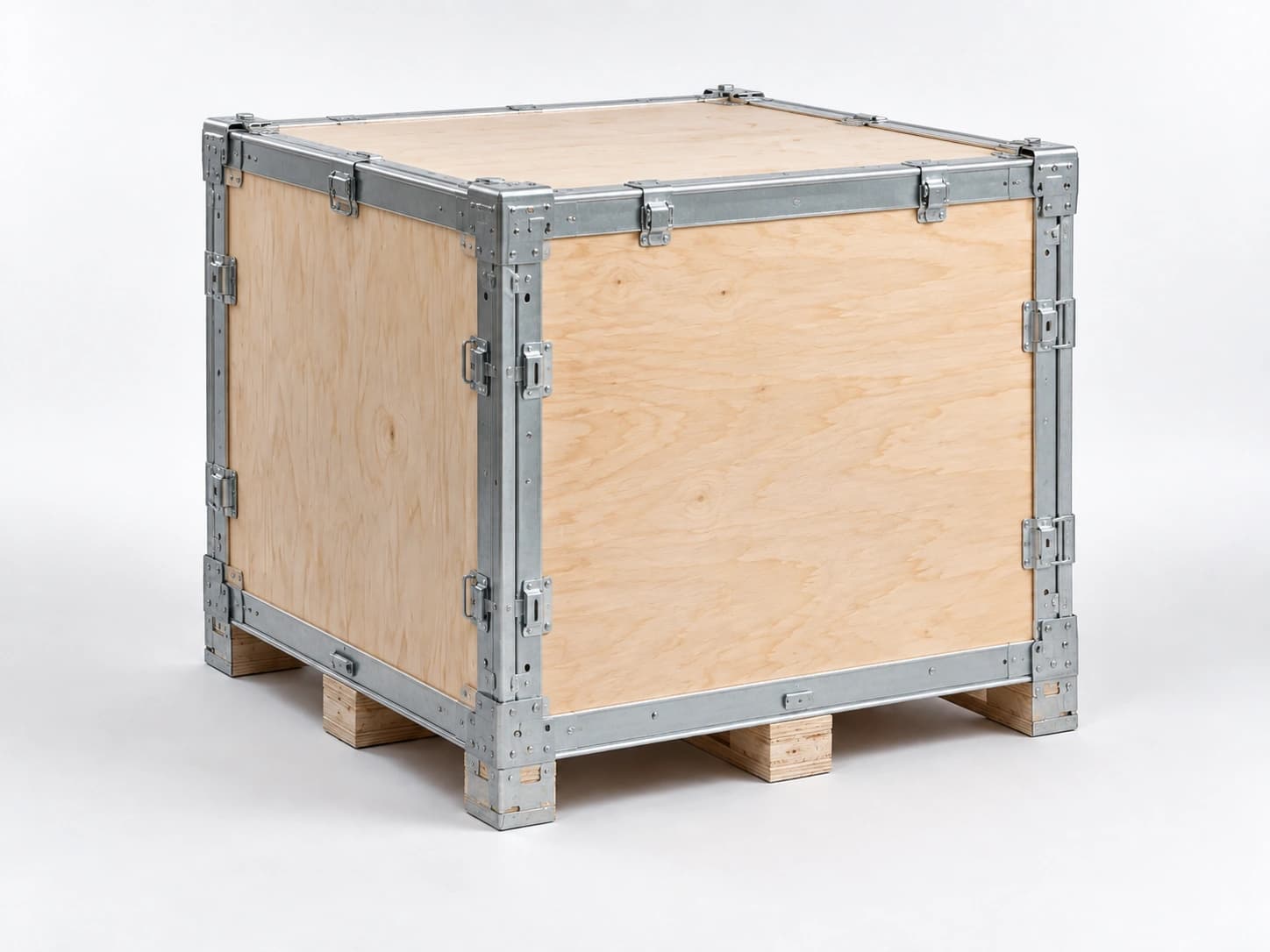
For export wood packaging, quarantine clearance — not production — is usually the bottleneck. Solid-timber crates must be heat-treated or fumigated and marked before customs declaration, which easily slips a tight sailing schedule. Fumigation-free crates are built from engineered plywood, removing that step at the material level: once packed, the goods can head straight to the terminal.
Engineered From the Inside Out
Material
ISPM 15 compliant eco-plywood sheets, zero quarantine holding
Frame
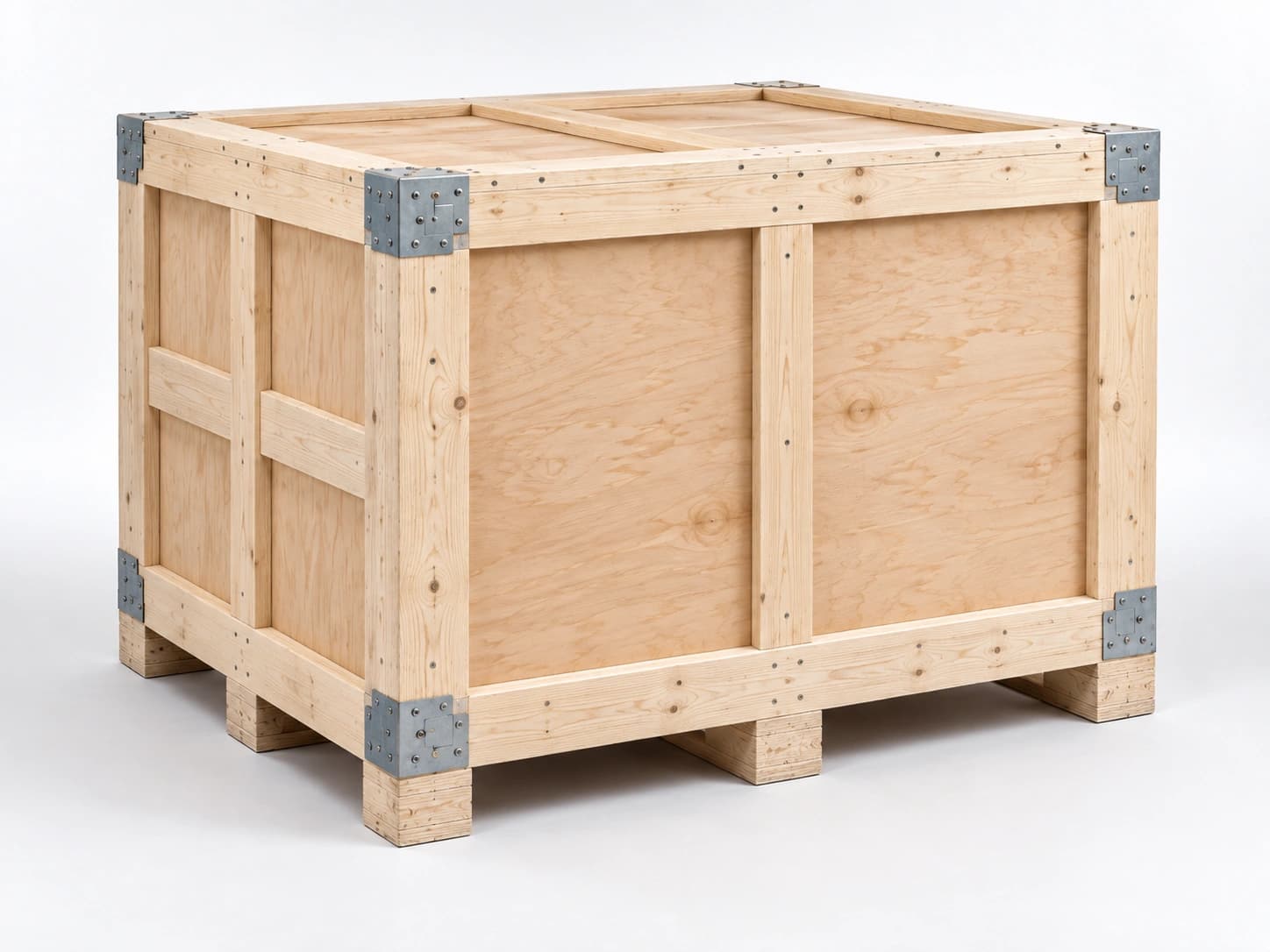
CNC precision cut panels with internal structural timber ribs
Connection
Galvanized rust-proof countersunk nails and heavy-gauge corner guards
Application
Global ocean freight machinery, precision industrial assemblies
Technical Specification
| Size range | GLOBAL CLEARANCE |
|---|---|
| 01 Material | ISPM 15 compliant eco-plywood sheets, zero quarantine holding |
| 02 Frame | CNC precision cut panels with internal structural timber ribs |
| 03 Connection | Galvanized rust-proof countersunk nails and heavy-gauge corner guards |
| 04 Application | Global ocean freight machinery, precision industrial assemblies |
| Key features | EXPORT PACKAGING · ISPM 15 COMPLIANT · CUSTOM SIZES |
Figures above are standard reference configurations. Final dimensions, load capacity and internal bracing depend on equipment geometry, centre of gravity and transport mode. Drawings or an on-site survey can be arranged.
Typical Industries
Frequently Asked Questions
Why does a fumigation-free crate not need fumigation or heat treatment?
ISPM 15 regulates wood packaging capable of harbouring live pests — principally solid timber. Engineered panels such as plywood are bonded under high temperature and pressure, which places them outside the scope of the standard. Crates built from these panels therefore require neither heat treatment nor fumigation, and can be declared for export without an IPPC treatment mark.
Is a fumigation-free crate weaker than a solid timber crate?
Not necessarily — what matters is structural design rather than the material family. Plywood is available in graded thicknesses (commonly 6–12 mm), and with internal structural timber ribs the assembly can carry heavy machinery. Capacity should always be confirmed against equipment weight, stacking and transport mode, with a reinforced base and internal bracing where required.
What packaging requirements apply to the EU, Middle East and Southeast Asia?
All three regions use ISPM 15 as the baseline for wood packaging quarantine, requiring solid-timber packaging to be heat-treated or fumigated and marked with the IPPC symbol; engineered panel packaging generally falls outside this. Where dangerous goods are involved, UN transport regulations additionally govern box type and certification. Country-specific rules may apply, so requirements should be confirmed per shipment with the consignee and carrier.
How long does production to port dispatch normally take?
Lead time depends on crate complexity, quantity and whether on-site packing is required. The plant is in Nansha, Guangzhou, roughly half an hour by road from the Nansha deep-water container terminal, so finished crates can be dispatched directly to port. Early notice once equipment availability is confirmed helps schedule surveying and production.
Send the Equipment Specs — Solution First, Then Price
Drawing review and on-site surveying available. The plant sits in Nansha, Guangzhou — about 30 minutes by road from the Nansha deep-water container terminal, so packed goods can be dispatched straight to port.