
Industrial Wooden Pallets
各类型木托盘
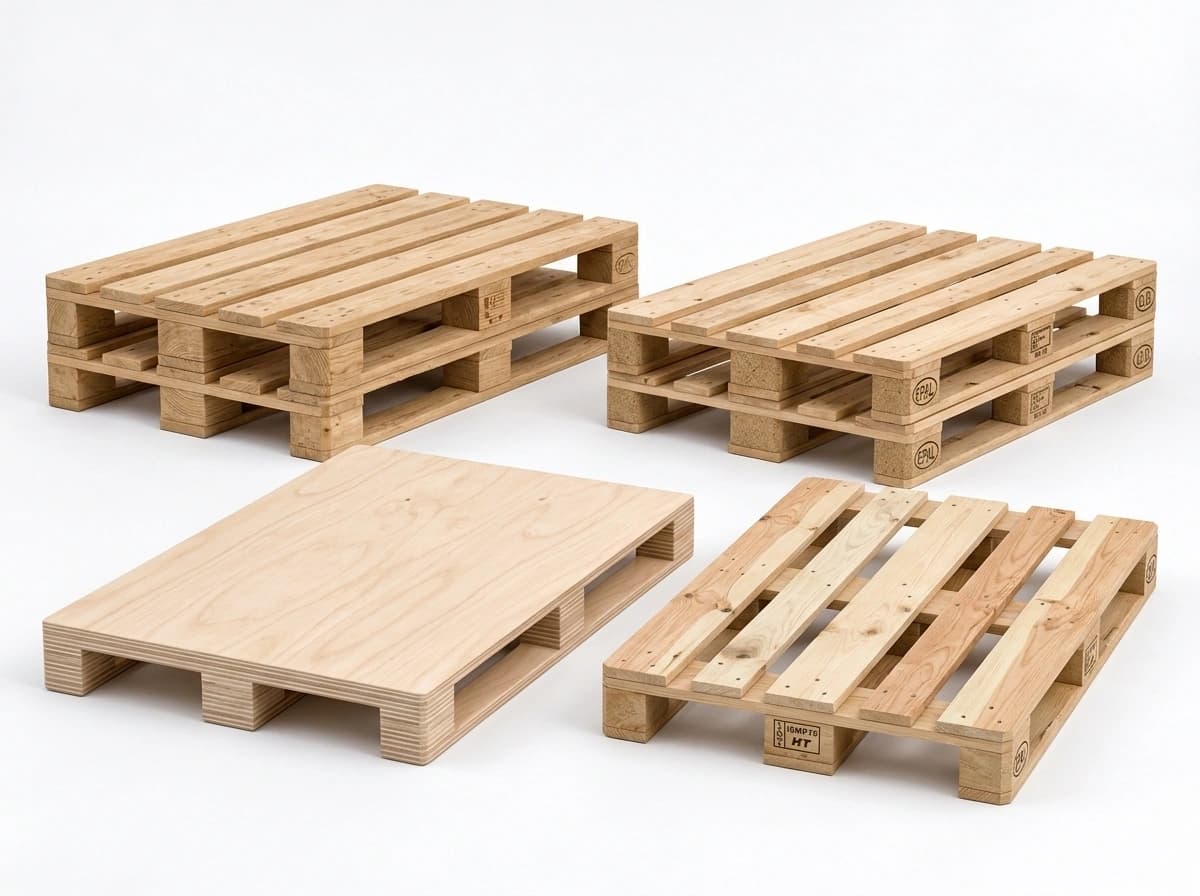
Pallets are easily treated as a commodity, yet they simultaneously carry, move and support stacked loads. Selection is less about price than about three matchings: entry configuration against the site's handling equipment, static and dynamic ratings against actual stacking, and conformance with the destination's pallet standard system.
Engineered From the Inside Out
Material
Kiln-dried solid timber, engineered plywood, and molded composite blocks
Frame
3-runner, perimeter-base, 9-block layouts (EPAL / GMA standards)
Connection
Automated CNC nailing with anti-pullout galvanized ring-shank nails
Application
Automated high-bay warehouses, 4-way forklift handling, container dispatch
Technical Specification
| Size range | 4-WAY ENTRY |
|---|---|
| 01 Material | Kiln-dried solid timber, engineered plywood, and molded composite blocks |
| 02 Frame | 3-runner, perimeter-base, 9-block layouts (EPAL / GMA standards) |
| 03 Connection | Automated CNC nailing with anti-pullout galvanized ring-shank nails |
| 04 Application | Automated high-bay warehouses, 4-way forklift handling, container dispatch |
| Key features | EURO / US STANDARD · FORKLIFT ACCESS · STORAGE & LOGISTICS |
Figures above are standard reference configurations. Dimensions, construction and load rating depend on cargo weight, stacking method, rack type and forklift entry direction. For export orders, confirm destination standard requirements as well.
Typical Industries
Frequently Asked Questions
How do EPAL and GMA pallets differ?
Chiefly size and standards system. EPAL pallets are commonly 1200 × 800 mm with four-way entry, the prevailing format in European logistics; GMA pallets are commonly 1200 × 1000 mm (48 × 40 in), built to the North American grocery industry standard. Entry configuration, block layout and load ratings are specified differently, so the destination market governs the choice.
When are 3-runner, perimeter-base and 9-block layouts appropriate?
A 3-runner pallet uses three longitudinal stringers for concentrated load, suiting racking and heavy goods. A perimeter-base design closes the frame on all sides, giving greater contact area and even compression — good for high stacking and dense storage. A 9-block pallet stands on nine blocks, is lighter and offers flexible four-way entry, suiting light-to-medium loads and frequent handling.
Solid timber or plywood — which pallet?
For exports, quarantine requirements are often decisive. Solid timber pallets fall under ISPM 15 and require heat treatment or fumigation plus an IPPC mark; engineered plywood pallets generally fall outside scope and can be declared without treatment. Choose solid timber where load capacity and durability dominate and the quarantine step is acceptable; choose plywood where simplified export paperwork and shorter lead time matter more.
How should pallet load ratings be read?
Ratings fall into static, dynamic and racking categories, and the figures differ widely — they are not interchangeable. Static capacity applies to uniformly stacked load at rest; dynamic capacity covers forklift handling and is usually well below static; racking capacity refers to long-term unsupported loading across beams, is the lowest of the three, and decreases as the beam span increases. The most demanding condition should govern selection.
Send the Equipment Specs — Solution First, Then Price
Drawing review and on-site surveying available. The plant sits in Nansha, Guangzhou — about 30 minutes by road from the Nansha deep-water container terminal, so packed goods can be dispatched straight to port.