
Hazardous Goods UN Crate
危包木箱
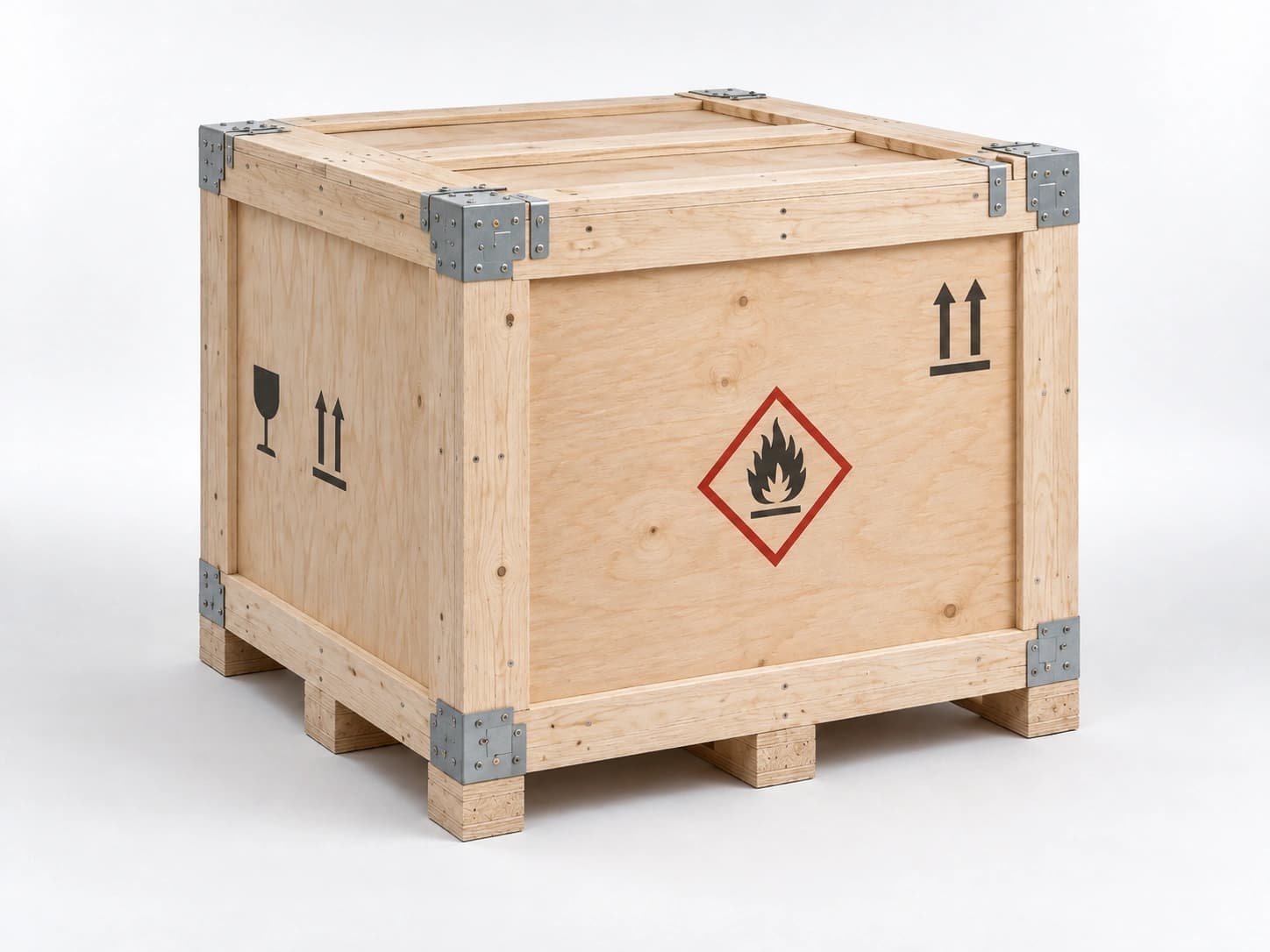
For dangerous goods the difficulty is not crate strength but the compliance chain: box type code, certification level, barrier lining and hazard labelling must each match the cargo and the mode of transport. A single mismatch can block customs clearance or lead to rejection by the carrier. Hazmat crates are designed against the UN box-type requirements, with body, lining and fasteners specified as a matched set.
Engineered From the Inside Out
Material
UN certified weather-resistant plywood approved for hazardous goods
Frame
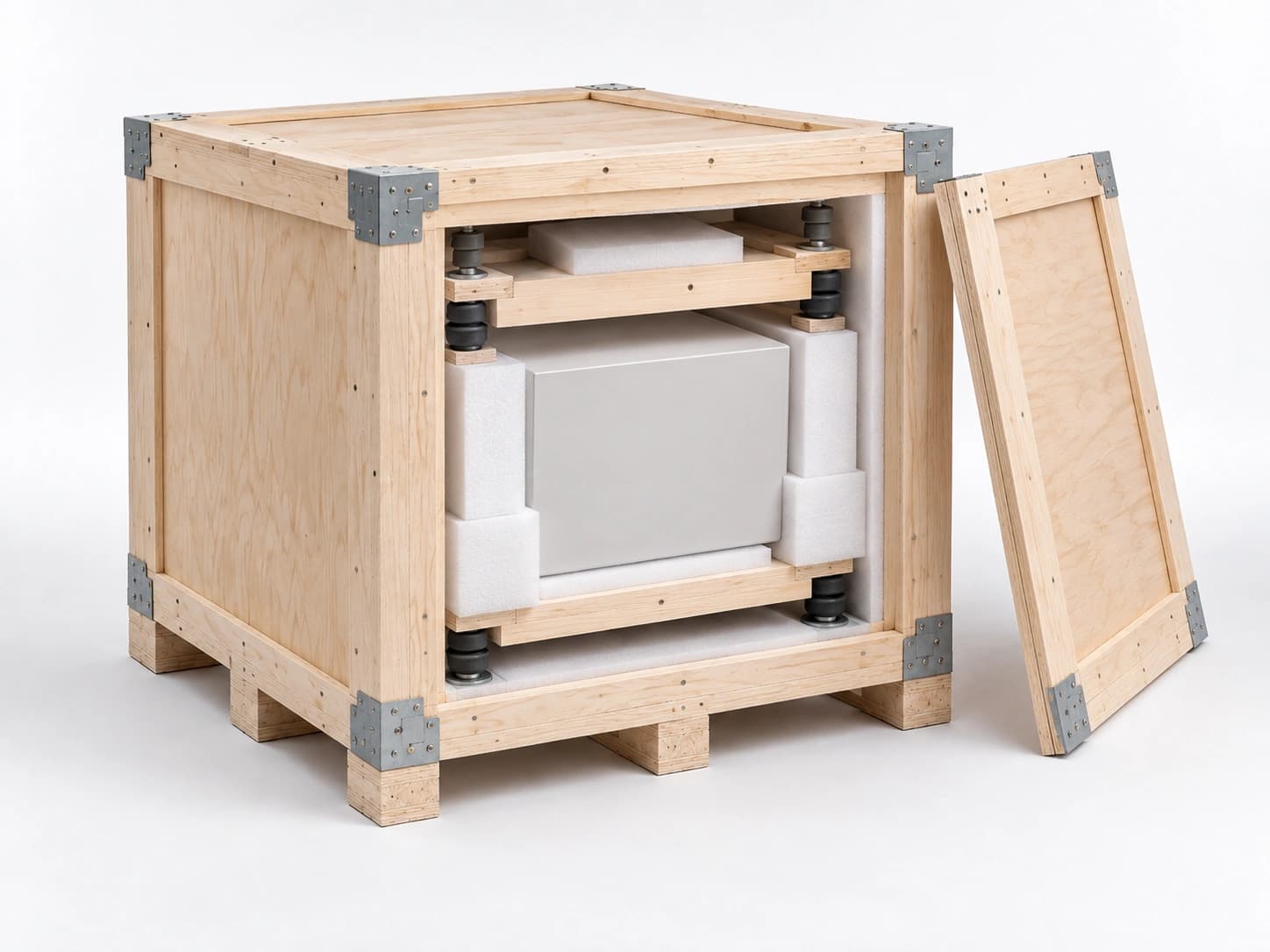
Hermetically sealed enclosure with anti-leakage barrier & cushion lining
Connection
Explosion-proof reinforced metal clasps & certified dangerous goods labeling
Application
Lithium battery racks, chemical materials, pressurized cargo export
Technical Specification
| Size range | UN 4D CERTIFIED |
|---|---|
| 01 Material | UN certified weather-resistant plywood approved for hazardous goods |
| 02 Frame | Hermetically sealed enclosure with anti-leakage barrier & cushion lining |
| 03 Connection | Explosion-proof reinforced metal clasps & certified dangerous goods labeling |
| 04 Application | Lithium battery racks, chemical materials, pressurized cargo export |
| Key features | UN CERTIFIED · HAZMAT REGULATION · ANTI-LEAKAGE |
Figures above are standard reference configurations. Box type and certification requirements must be determined from the specific substance, UN number, packing group and mode of transport. Please provide the safety data sheet (SDS) before ordering so requirements can be verified.
Typical Industries
Frequently Asked Questions
What does UN 4D mean?
UN transport regulations identify packaging by a letter-and-number code: the leading digit 4 denotes a box, and the following letter denotes the material — 4D specifically designates a plywood box. "UN 4D" therefore describes the packaging type. Whether it is acceptable for a given substance still depends on its hazard class, packing group and certification level.
What packaging conditions apply to exporting lithium battery racks?
Lithium batteries are dangerous goods, and packaging must meet the UN transport regulations applicable to the relevant UN number — typically involving box certification, protection against short circuit and inadvertent activation, and a lining designed to contain leakage or thermal propagation. The applicable provisions vary with state of charge and mode (sea or air), and must be confirmed per shipment against the actual cargo parameters.
How is the leakage barrier achieved?
The crate uses a fully enclosed body with a dedicated moisture and leakage barrier cushion lining, and the joints are secured with reinforced metal clasps. Lining material is selected for chemical compatibility with the contents. Where the cargo is corrosive or requires thermal control, additional barrier layers are specified to suit the actual conditions.
Can you support the packaging documentation required for customs export?
The company holds customs authorisation for the application of wood packaging treatment marks, registration CN51188, and can support exports subject to wood packaging quarantine requirements. Dangerous goods packaging also involves performance and use certification stages; the exact documents required vary with the substance and destination, so the checklist should be confirmed in advance.
Send the Equipment Specs — Solution First, Then Price
Drawing review and on-site surveying available. The plant sits in Nansha, Guangzhou — about 30 minutes by road from the Nansha deep-water container terminal, so packed goods can be dispatched straight to port.